
How Molly’s Game Got Poker Right (And Wrong)
Molly Bloom ran one of the most exclusive poker games in America for nearly a decade. The 2017 film about her operation shows Hollywood stars losing millions at her table while FBI agents close in. Aaron Sorkin’s screenplay turns real events into cinema, but the poker community remains divided on what the movie actually got right. Professional players point to specific scenes that match their own experiences in underground games, while others note clear errors in how the film portrays basic poker mechanics and etiquette.
The Accurate Parts Nobody Talks About
The film captures the paranoia that permeates high-stakes underground games. Players constantly worry about collusion, marked cards, and rigged decks. This suspicion exists in most private games where large sums change hands without regulatory oversight. The movie shows Player X demanding shuffle machines and new decks every hour. Many professional players confirm this behavior is common in unregulated games.
The credit system depicted closely matches how these games actually function. Players vouch for each other, creating chains of financial obligation that extend far beyond the table. When one player defaults, multiple people can lose money. The film shows this when a player’s bankruptcy triggers a cascade of unpaid debts. Underground games today still operate this way, according to long-standing industry practices.
The Film’s Treatment of Poker Mathematics
The movie glosses over variance in ways that experienced players find unrealistic. When you play poker at high stakes, bad beats and coolers happen frequently, yet the film presents them as dramatic turning points rather than statistical inevitabilities. Seasoned grinders understand that even premium hands lose regularly and that extended downswings are part of the game.
The rake structure Molly describes would likely bankrupt most games within weeks. Taking $5,000 per night from a table requires players to win massive pots just to break even. Professionals calculate these margins carefully, and the numbers shown in the film would make the game unsustainable for everyone except the house. The movie also simplifies how credit and settlement work in private games, where players often owe each other directly rather than settling exclusively through the host.
Where Hollywood Overwrites Reality
The film presents poker tells as obvious physical tics that reveal hand strength. In reality, high-level players spend years developing balanced ranges that prevent opponents from drawing conclusions based on physical behavior alone. The movie shows players making strategic errors that would be punished immediately in real high-stakes games. No competent player consistently announces hand strength through betting patterns the way characters do on screen.
Molly’s ability to manage volatile personalities while maintaining game integrity also feels overstated. The film shows her ejecting problem players and enforcing rules without visible backing. Those familiar with underground poker note that hosts typically rely on strong connections to handle disputes involving seven-figure pots. The movie softens the enforcement realities that keep these games running.
The Legal Framework Gets Murky Treatment
The film blurs the line between federal and state gambling laws. Running a poker game can violate different statutes depending on location, structure, and rake. The movie treats all underground poker as equally illegal, even though enforcement varies widely by jurisdiction. Molly’s federal charges stemmed from specific issues involving interstate commerce and money laundering, not simply hosting poker games.
Legal frameworks have continued to evolve since Molly’s operation ended. Several states now regulate online poker, and many jurisdictions focus enforcement efforts on larger criminal enterprises rather than isolated private games. The film’s portrayal of aggressive prosecution reflects the era more than the current legal landscape.
Technical Details That Ring True
The staking arrangements shown in the film reflect standard practice in high-stakes poker. Backers often take 50% or more of winnings while covering losses, exactly as depicted. The movie accurately shows how these arrangements can distort incentives and complicate table dynamics. Players with different backers at the same table raise legitimate collusion concerns, which the film handles well.
The tipping culture also aligns with reality. Dealers in private games earn much of their income from player generosity rather than fixed wages. The film’s portrayal of large tips after major pots mirrors how staff are compensated in many underground games, though it also hints at the conflicts this system can create.
What Professional Players Notice
The chip denominations and betting increments shown make sense for the stakes involved. The film uses $100, $500, and $5,000 chips in realistic proportions. Betting patterns follow logical progressions rather than exaggerated Hollywood numbers, which helps maintain credibility with experienced viewers.
The seating politics also ring true. Regular players often claim specific seats and resist changes, while new players are positioned strategically to maximize action. The film includes these dynamics without explanation, which feels authentic to those familiar with the unspoken rules of private games.
The Missing Pieces
The film never addresses game selection, a factor that dominates professional decision-making. Serious players spend more time choosing profitable games than actually playing them. The movie presents Molly’s game as the only option for high-stakes action, but reality involves constant competition between rival games for the same player pool. Leaving this out makes the poker ecosystem feel smaller and simpler than it truly is.
Conclusion
Molly’s Game succeeds where many poker films fail by understanding the social mechanics of a private game: trust, paranoia, credit, and quiet power. Its weaknesses are familiar ones, exaggerating strategy, simplifying variance, and smoothing over the less visible forces that keep underground games functioning. Watched as a character-driven story set inside a poker world, the film holds together. Judged as a technical depiction of elite poker, its inaccuracies stand out. That tension explains why experienced players can disagree so strongly about the same scenes and still feel justified.
FAQ
Is Molly’s Game accurate about high-stakes poker?
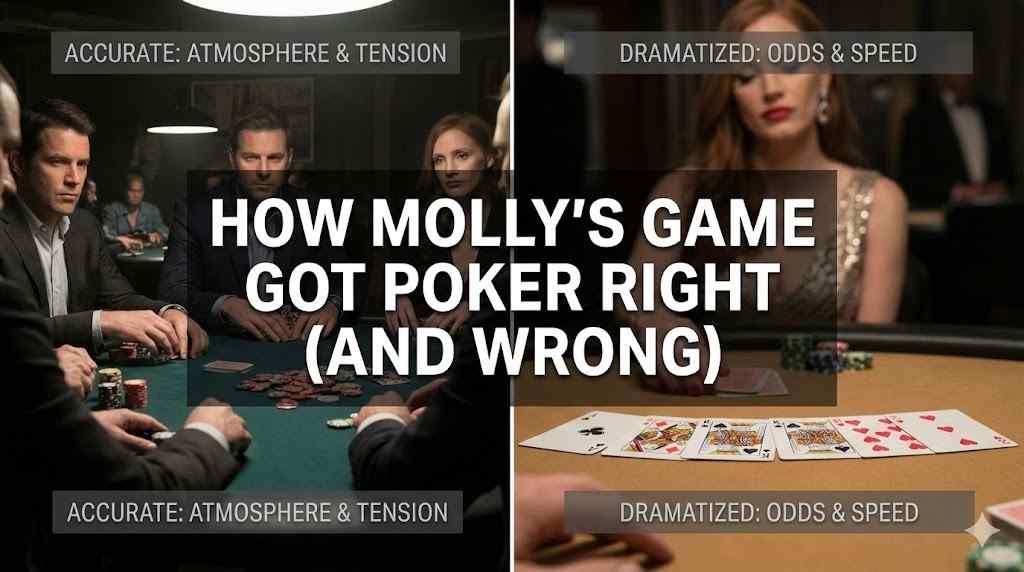
It is accurate in atmosphere and structure, particularly around credit systems, seating politics, and security concerns, but it simplifies strategy and variance for storytelling.
Did Molly Bloom really run poker games like the movie shows?
The film is based on real events but compresses timelines and dramatizes moments. The overall framework reflects reality, while many details are shaped for narrative impact.
Are poker tells really that obvious in real games?
No. At higher levels, players work hard to avoid clear physical or betting-pattern tells, relying instead on balanced decision-making.
How do private poker games usually handle credit?
Most rely on trust networks where players vouch for each other, which is why one default can affect multiple people connected to the game.
Why do poker movies often misrepresent strategy?
Because real poker decisions are subtle and repetitive. Films exaggerate patterns and outcomes to make choices easier for viewers to follow.