
Missing Teeth? Your Guide to Dental Implants
Losing a tooth can affect more than just your smile. It can change how you speak, what you eat, and even impact your confidence. Fortunately, modern dentistry offers a durable and natural-looking solution: dental implants. These innovative replacements act just like natural teeth, restoring both function and aesthetics to your smile.
What Are Dental Implants?
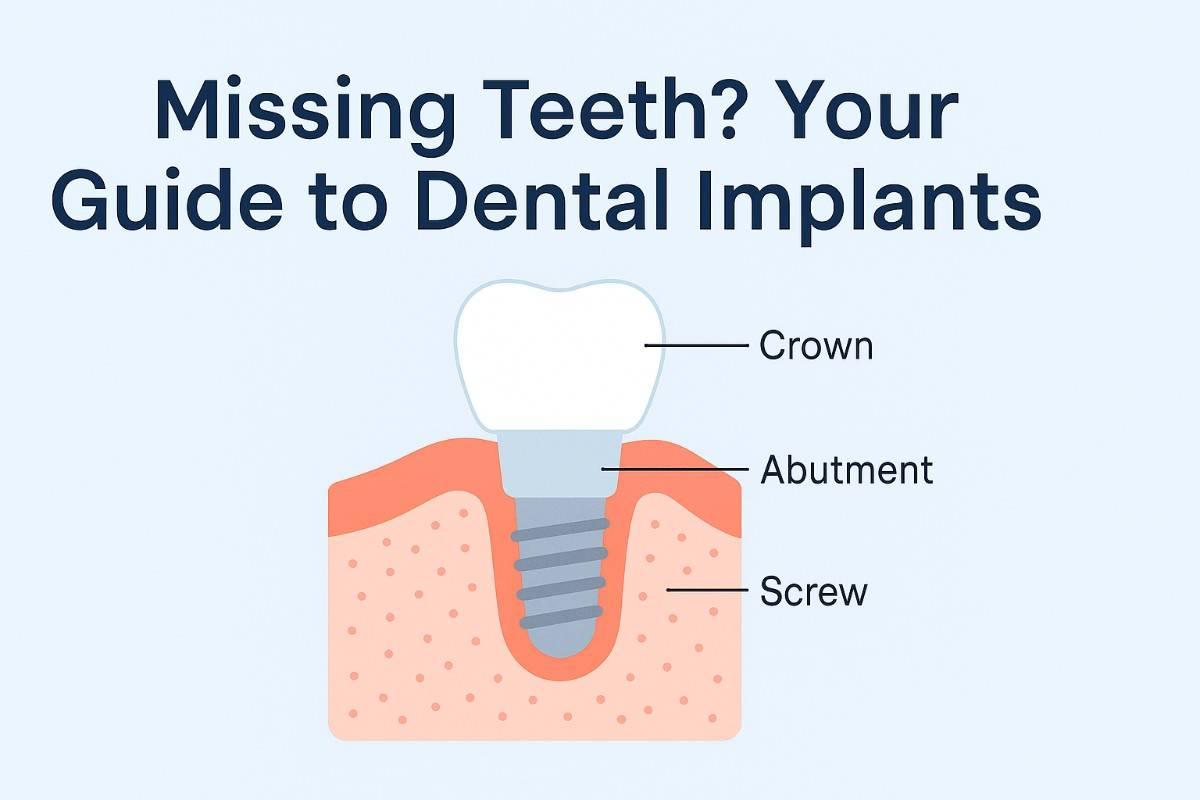
Before diving into the specific types, let’s cover the basics. A dental implant is a small, screw-like post, typically made of biocompatible titanium, that is surgically placed into the jawbone. This post acts as a new root for a replacement tooth. Over time, a process called osseointegration occurs, where the jawbone fuses with the implant, creating an incredibly strong and stable foundation.
Once the implant has integrated with the bone, a connecting piece called an abutment is attached. This abutment protrudes just above the gum line and serves as the anchor for your new custom-made crown, bridge, or denture. The result is a replacement tooth that looks, feels, and functions just like a natural one.
The primary benefits of dental implants include:
- Durability: With proper care, implants can last a lifetime.
- Stability: They are fixed in place and won’t slip or shift like traditional dentures.
- Bone Health: Implants stimulate the jawbone, preventing the bone loss that typically follows tooth loss.
- Natural Appearance: They are designed to blend seamlessly with your existing teeth.
- Improved Function: You can eat, speak, and smile with confidence.
Single Tooth Implants
A single tooth implant is the ideal solution when you are missing just one tooth. This is a common scenario, often resulting from an injury, decay, or a failed root canal. The procedure involves placing one implant into the jawbone at the site of the missing tooth, which will then support a single dental crown.
Who Is a Good Candidate?
You are likely a good candidate for a single tooth implant if you:
- Have one missing tooth.
- Have sufficient jawbone density to support the implant.
- Have healthy surrounding teeth and gums.
One of the major advantages of a single implant over a traditional dental bridge is that it doesn’t require altering the adjacent healthy teeth. A bridge requires the teeth on either side of the gap to be ground down to support the restoration, which can compromise their long-term health. A single implant, however, is a self-contained solution that preserves the integrity of your natural teeth. If you’re considering dental implants in Munster, IN, this option can provide a lasting and healthier alternative to traditional bridges.
Multiple Teeth Implants
When you are missing several teeth in a row, an implant-supported bridge is often the best option. Instead of replacing each missing tooth with an individual implant (which can be costly and invasive), this approach uses two or more implants to support a custom-made bridge. The implants are strategically placed at either end of the gap, and the bridge, which consists of several connected crowns, is then attached to them.
When Are They Needed?
Implant-supported bridges are recommended for individuals who:
- Are missing two or more adjacent teeth.
- Do not want to wear a removable partial denture.
- Want a more stable and permanent solution than a traditional bridge.
This method provides excellent stability and function while being more cost-effective than placing an individual implant for every missing tooth. It also helps distribute chewing forces evenly, protecting your jawbone and remaining natural teeth. An implant-supported bridge offers a blend of durability and aesthetics.
All-on-4® Dental Implants
The All-on-4® treatment concept is a revolutionary solution for people who have lost most or all of their teeth in an upper or lower arch. As the name suggests, this technique uses just four strategically placed dental implants to support a full arch of permanent, non-removable replacement teeth.
Two implants are placed vertically in the front of the jaw, where the bone is typically denser. The two posterior implants are placed at a 45-degree angle. This angulation maximizes the use of available bone, often eliminating the need for extensive bone grafting procedures that are common with traditional full-arch implant methods.
Who Benefits from All-on-4®?
All-on-4® is an excellent choice for patients who:
- Are missing all or most of their teeth in one or both arches.
- Are current denture wearers seeking a more stable and comfortable alternative.
- Have experienced some jawbone loss but may not be candidates for traditional implants without bone grafting.
The most significant benefit of the All-on-4® system is its efficiency. In many cases, patients can have their implants placed and be fitted with a temporary, fully functional set of teeth on the same day as their surgery. This “Teeth-in-a-Day” approach dramatically reduces treatment time and allows patients to leave the clinic with a beautiful, secure smile immediately.
Mini Dental Implants
Mini dental implants are a smaller version of traditional implants, typically less than 3 millimeters in diameter. While they function on the same principle of osseointegration, their smaller size makes them suitable for specific situations where traditional implants may not be viable.
The placement procedure for mini implants is less invasive, often requiring only local anesthesia and a shorter recovery time. They are most commonly used to stabilize loose lower dentures, providing a significant improvement in comfort and function for denture wearers. They can also be used in cases where the space for a replacement tooth is very narrow or when a patient has significant bone loss and is not a candidate for bone grafting.
When Are Mini Implants Considered?
Mini implants might be the right choice if you:
- Need to stabilize a loose or ill-fitting denture.
- Have insufficient bone density for traditional implants and want to avoid bone grafting.
- Are looking for a less invasive and more affordable implant option for specific applications.
While they are a valuable tool, it’s important to note that mini implants are not as strong as their traditional counterparts and are not typically recommended for replacing large molars or supporting full bridges in areas with heavy biting forces.
Conclusion
Choosing the right type of dental implant is a crucial decision that depends on your individual oral health, the number of teeth you’re missing, and your long-term goals. From a single missing tooth to a full-mouth restoration, there is an implant solution designed to restore your smile and improve your quality of life.