
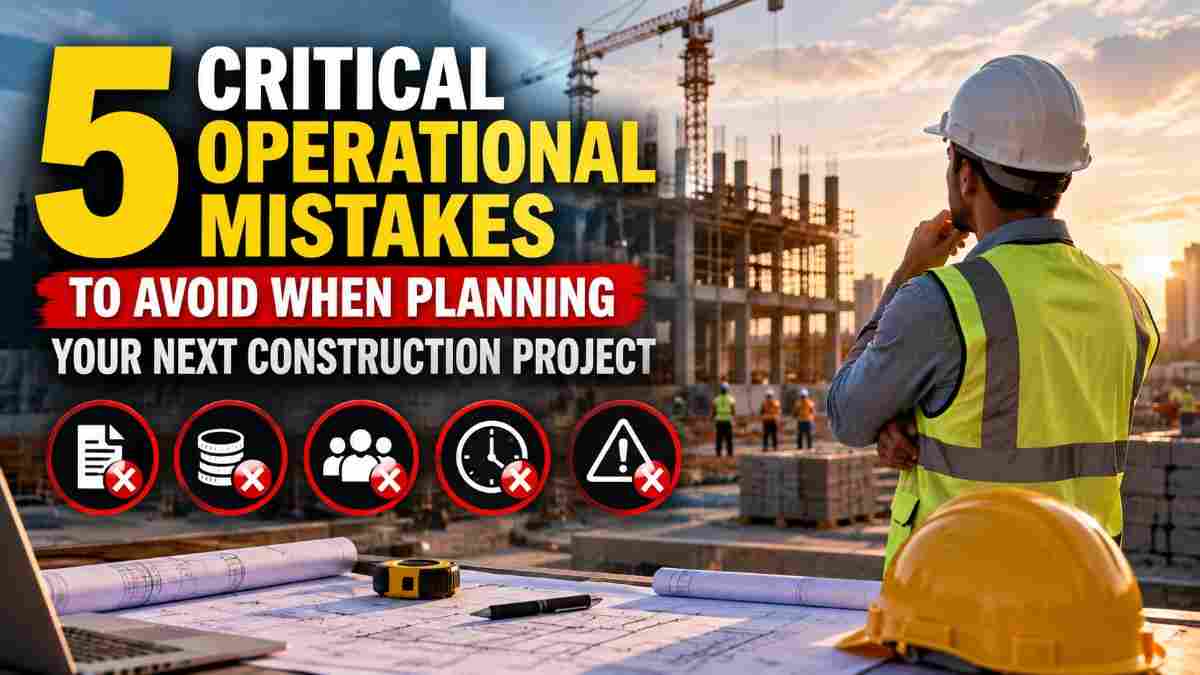
5 Critical Operational Mistakes to Avoid When Planning Your Next Construction Project
Construction projects don’t usually fall apart because of one huge mistake. It’s normally a bunch of smaller things that were overlooked early on. A drawing wasn’t properly checked. A supplier was assumed to be on time. Someone on site didn’t get an important update. A cost was pushed into next month’s numbers because there wasn’t enough time to deal with it. Then those small problems start adding up. By the time everyone notices, the project is already running late and the budget has started moving in the wrong direction.
That’s why the operational side of construction deserves as much attention as the actual build. Labour availability, material costs and supply issues are still major concerns for construction businesses in 2026, according to the Associated General Contractors of America.
Here are five common mistakes that can cause unnecessary trouble.
- Starting Before Everything Is Properly Figured Out
There’s always pressure to get started. The site is ready. The contractors are booked. Everyone wants to see work happening. But starting before the details are settled can create a much bigger headache later.
Designs need to be checked properly. Site conditions need to be understood. Underground services, access, drainage and existing structures can all throw up surprises. And if one part of the design affects another trade, that needs to be sorted before work moves ahead.
Consider something fairly basic. A contractor installs part of a ceiling and then finds out that a service route needs to pass through the same space. Now the ceiling has to come down, the route gets changed and someone has to pay for the extra labour and materials. The work technically continues. But time and money have already been lost.
- Thinking the Budget Will Stay Exactly as Planned
A budget looks very reassuring when everything is still on paper. Construction doesn’t stay on paper for very long. There are permits, insurance, transport, equipment, waste, temporary facilities and plenty of other costs that can get missed during the initial estimate. Then there are material prices and labour costs, which can change while the project is still underway. A contingency isn’t there because the estimate was bad. It’s there because construction has variables that nobody can completely predict.
The other mistake is checking costs too late. If spending is reviewed only at the end of the month, there may already be a sizeable gap between what was expected and what has actually been spent. A quick weekly review of actual costs, committed costs and upcoming purchases gives the project team a chance to do something about it. Finding a problem early is much cheaper than explaining it later.
- Assuming Everyone Has the Same Information
This one causes an incredible amount of unnecessary rework. The architect has one drawing. The subcontractor is working from an older version. The site supervisor has heard about a change, but the crew hasn’t. And then somebody builds the wrong thing. Construction sites involve a lot of people and companies at the same time. Keeping everyone aligned isn’t just about having project management software. The communication process itself needs to work. OSHA also stresses the importance of communication and coordination between contractors, subcontractors and other employers working on the same site.
Digital tools are useful for drawings, documentation and formal updates. But they don’t solve everything. Try making a phone call beside heavy machinery or from the other end of a large site. It’s not exactly ideal. For situations where crews need quick, direct communication across a busy site, radio hire can be a practical option, particularly when buying equipment for a temporary project doesn’t make much sense.
The bigger issue is having a clear communication process. Who needs to know? Who makes the decision? What happens when something urgent changes? Those questions should be answered before the site gets busy.
- Treating Safety Like a Document That Sits in a Folder
A safety plan can look excellent on paper. That doesn’t mean much if nobody actually uses it. Construction sites change constantly. A new machine arrives. Another contractor starts work. Materials are moved into a different area. Weather changes. A walkway gets blocked. The risks aren’t necessarily the same at 8am and 3pm.
Regular toolbox talks, equipment checks, site briefings and near-miss reporting help keep safety connected to what’s actually happening. This is particularly important when several contractors are working together because different teams may have different procedures.
- Leaving Material Procurement Until the Last Minute
This sounds obvious, but it happens all the time. A material is needed in three weeks, so the order gets placed next week. Then the supplier says there’s a delay. Suddenly a crew is sitting around waiting for something that should’ve been on site already.
Specialist products, imported materials and equipment with long lead times need to be identified much earlier. It also helps to know which items are genuinely critical. If one particular component doesn’t arrive, can work continue somewhere else, or does the whole schedule stop? That distinction matters. Having alternative suppliers for important materials can also reduce the risk. So can simply keeping a proper record of what has been ordered, what has shipped and what’s still waiting for approval. And once materials arrive, they need somewhere suitable to go. Expensive materials left exposed to weather or stored incorrectly can become another avoidable cost.
The Problems Usually Start Earlier Than People Think
Most project problems don’t suddenly appear on the day they become expensive. The warning signs were usually there earlier. A design wasn’t completely resolved. A cost wasn’t tracked closely enough. A supplier wasn’t followed up. Two teams weren’t working from the same information. All of these issues when put together, and the project starts losing time, money and control.
Good construction planning isn’t about trying to predict every single thing that could go wrong. That’s unrealistic. It’s about putting enough structure around the project that small problems can be dealt with while they’re still small.
Clear responsibilities. Regular cost checks. Reliable site communication. Practical safety procedures. Early procurement. Not complicated. But these are the details that often decide whether a project runs smoothly or spends the last few months trying to catch up.